Riccardo Previdi, Carlo Zauli
Sconvolti
in collaboration with Museo Carlo Zauli, Faenza
Opening:
Monday, 7 April, 6 – 9 pm
Hours Milano Design Week:
Tuesday 8 to Friday 11 April, 11 am – 6 pm
Saturday 12 and Sunday 13 April, 12 – 6 pm
until 16 May 2025
by appointment
write to spaziolima @pconp.com
or whatsapp to +393478212305
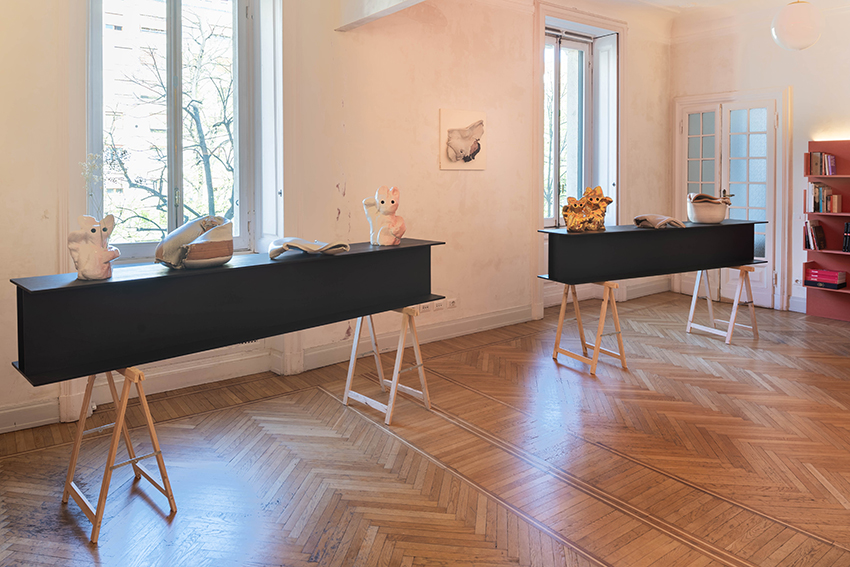
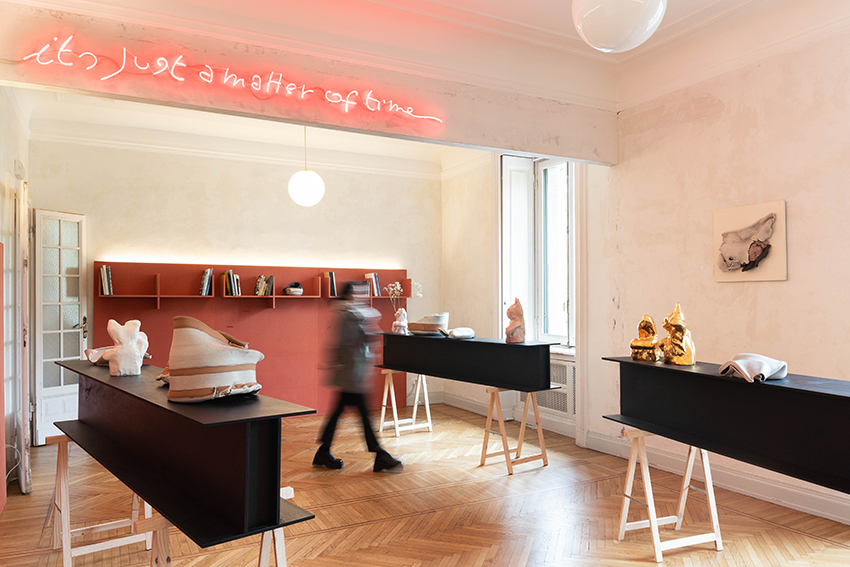
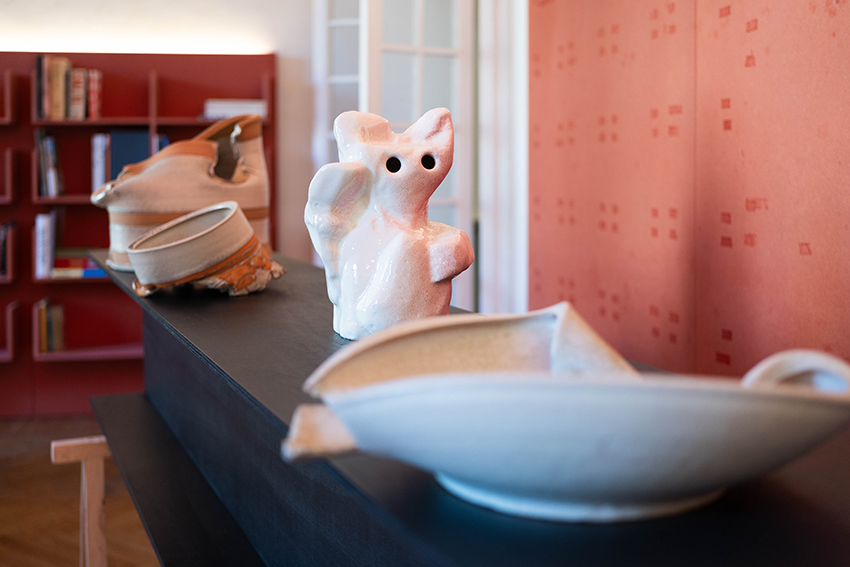
We are on the scene of an explosion: scattered materials, altered surfaces, a reddish light lingering in the air. Entering the room, one meets the fixed gazes of cats—silent and watchful—witnesses to a change that has just occurred or to something that is about to happen.
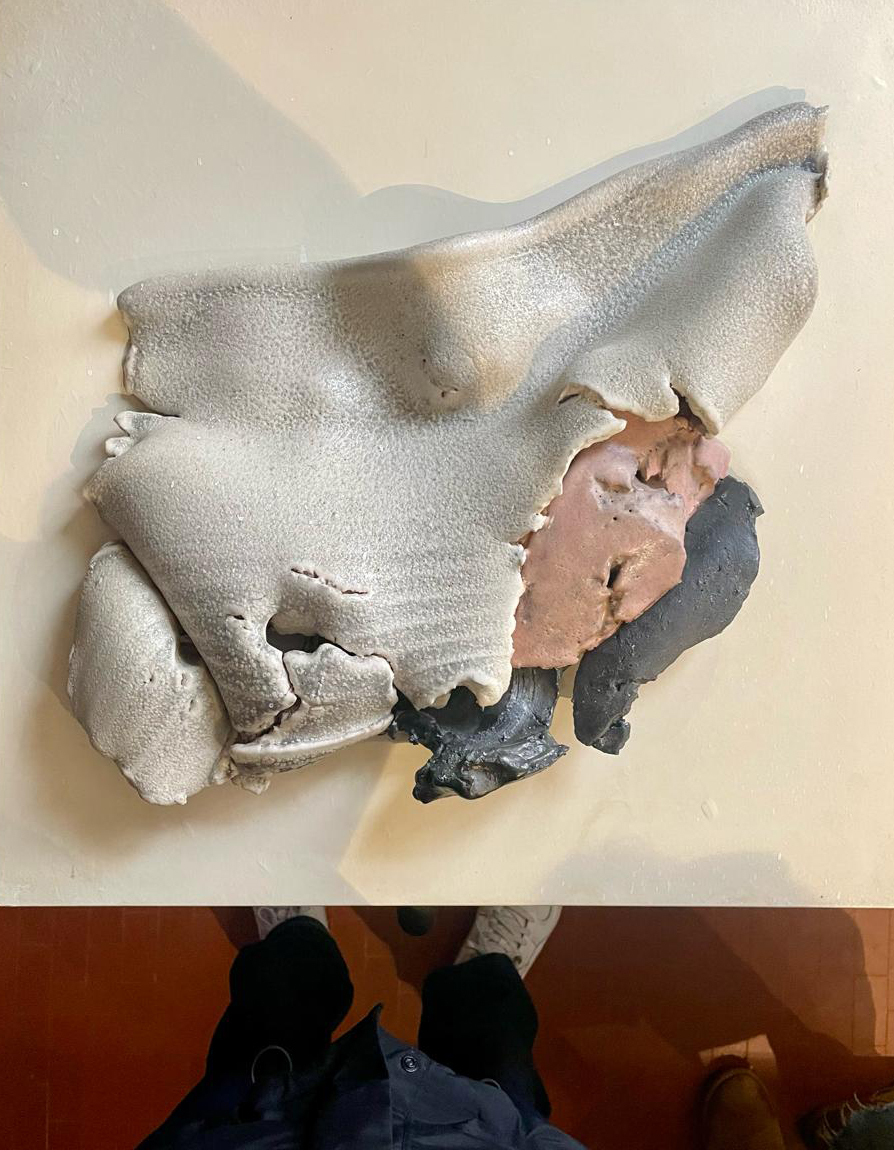
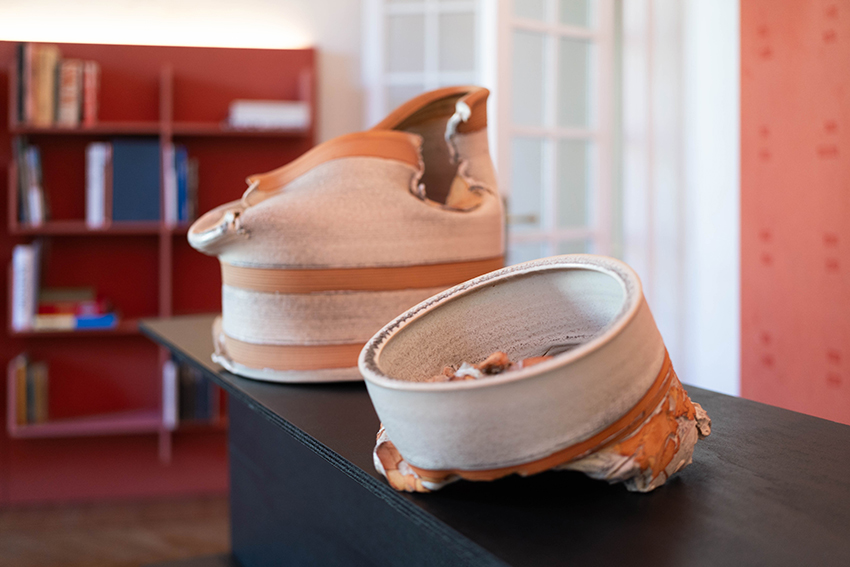
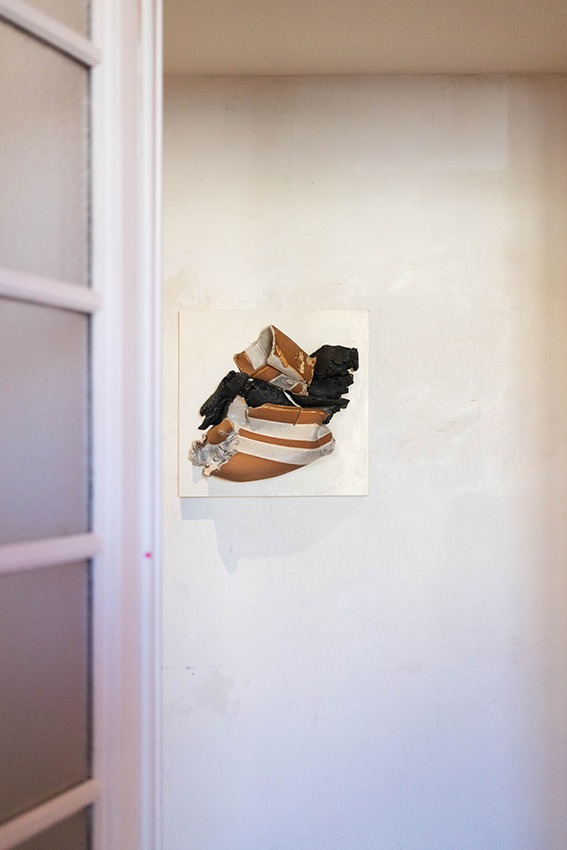
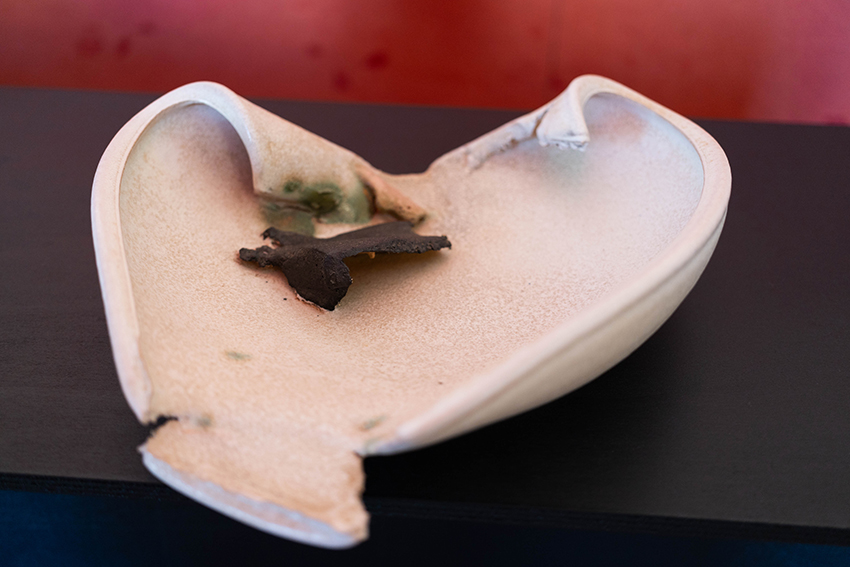
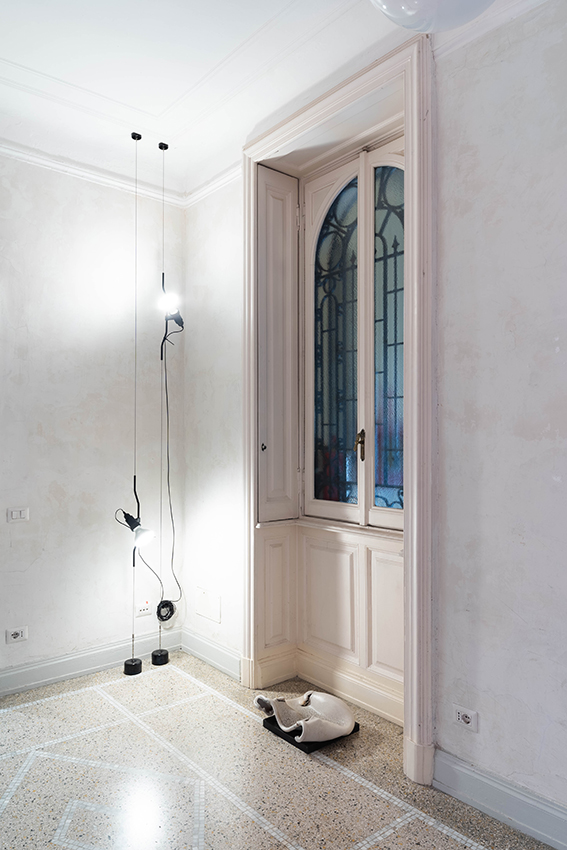
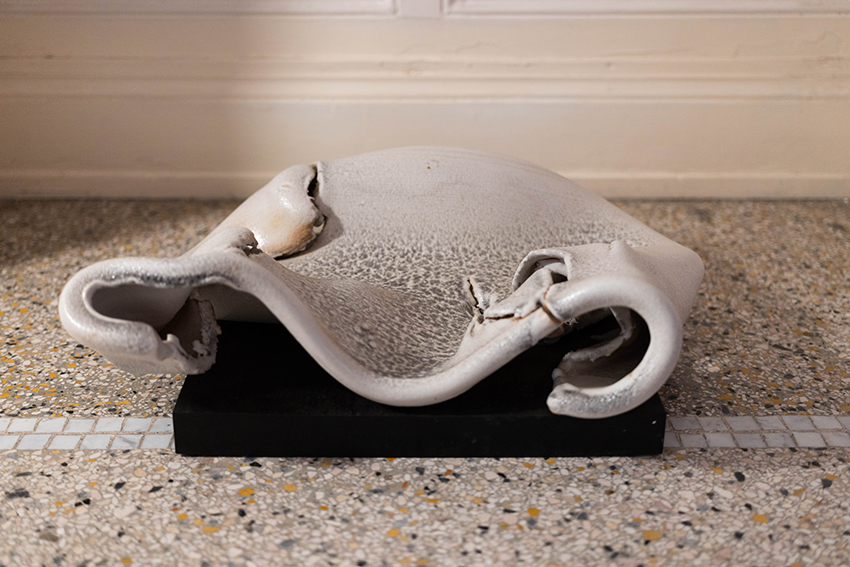
Sconvolti brings into dialogue two artistic explorations separated by time: those of Carlo Zauli and Riccardo Previdi, both characterized by a latent tension that manifests in the materiality of their works. Zauli’s Vasi Sconvolti bear the marks of transformation: the material deforms, opens up, as if struck by a sudden force. This gesture marks a break from the pursuit of formal balance of the previous decade, instead revealing the unease of the historical period in which they were created. Made from 1976 onward, during Italy’s Years of Lead, these works seem to absorb and reflect the uncertainty of their time, turning ceramics into a sensitive, almost vulnerable surface.
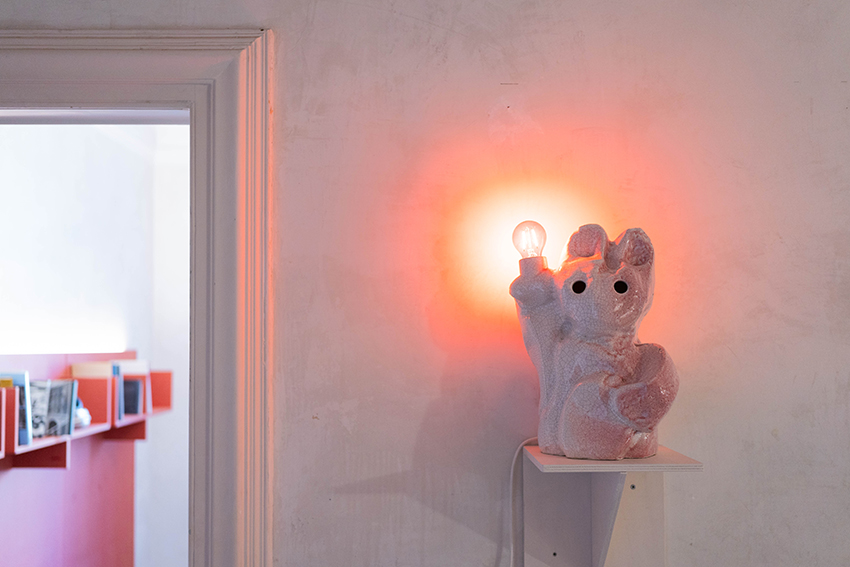
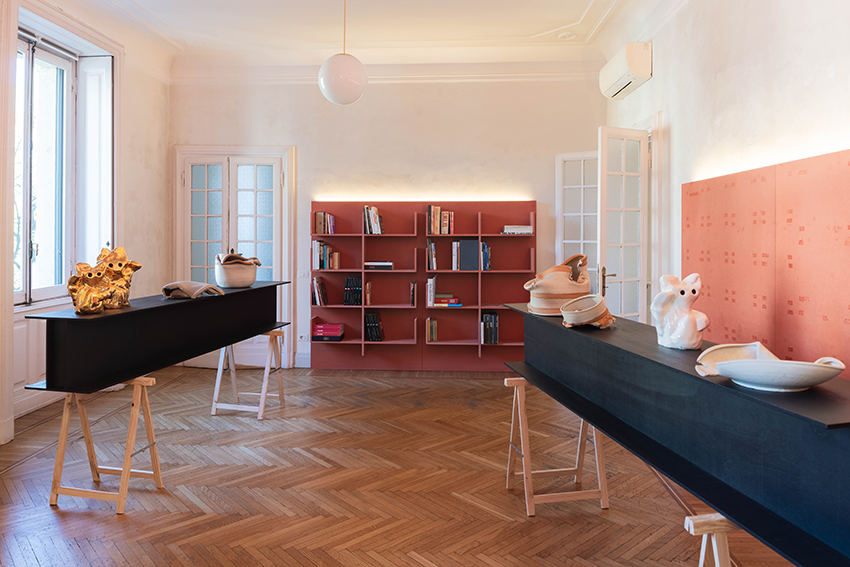
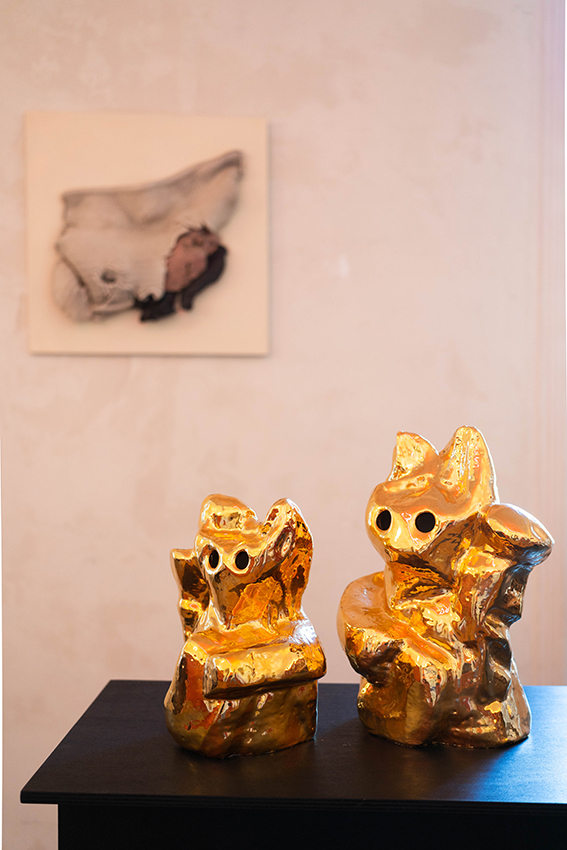
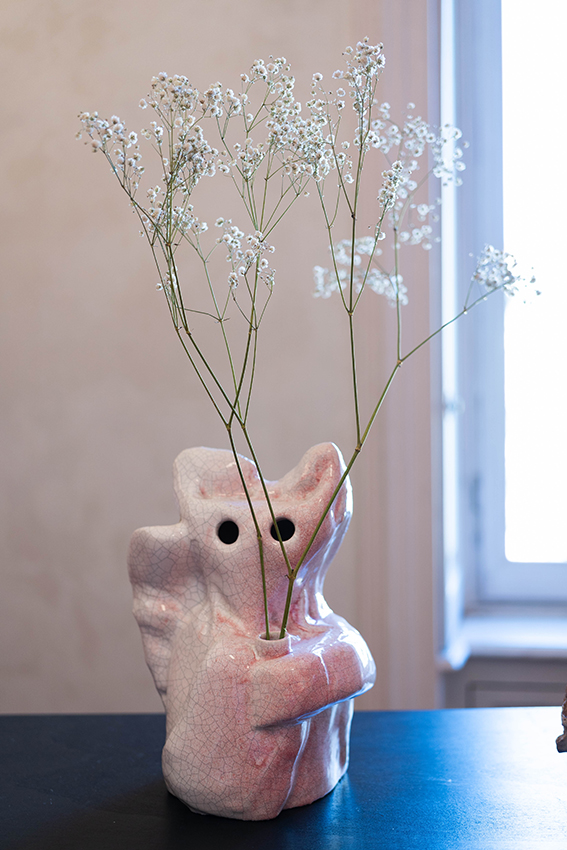
Riccardo Previdi’s works amplify this sense of instability. The sculptures in his Attenti al lupo series take the shape of Maneki Neko, the famous Japanese lucky cats, but here their attitude is different: they do not welcome; they observe. Their hypnotic and enigmatic gaze suggests a vigilant presence, a threshold to be crossed with caution.
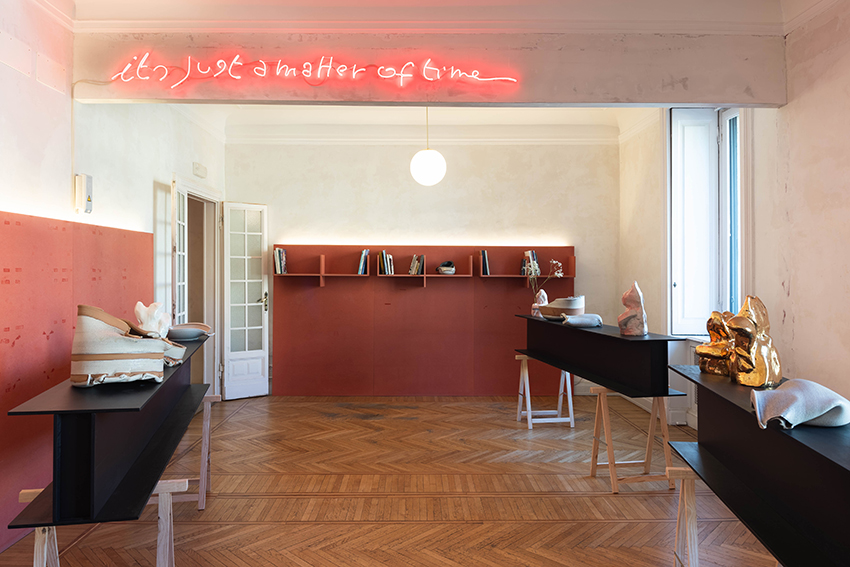
The black beam, divided into three parts, evokes either a fragment of a collapsed structure or, conversely, a point of support—a raft on which to regain balance. Around it, objects and figures arrange themselves in a choreography that interweaves memory and the present, matter and life.
Bringing this suspended tension to a close is Previdi’s red neon piece—a portrait of gallerist and friend Massimo Minini, created using his handwriting and titled with his given name: Massimo (it’s just a matter of time), 2023. An invitation to observe and perceive the subtle boundary between what has been and what is about to happen.
Interview with Riccardo Previdi and Matteo Zauli
Sconvolti – Disrupted
disrupted /dis’ raptid/ adjective
1. Reduced to a chaotic state, thrown into disarray. “A country disrupted by war.”
2. Deeply disturbed, profoundly shaken. “I am disrupted by what has happened.”
definition from: Oxford Languages Dictionary
Let’s start with the title.
Matteo, why did Carlo Zauli choose it for this series of works?
MZ: The Vasi Sconvolti were born by chance, as an unexpected outcome of research into vase forms that could somehow approach primary geometric shapes. The name comes directly from the atmosphere that permeated Italian society at the time: the first vases were produced at the end of 1976 and proliferated over the next two years, during the Years of Lead. My father often said that these vases breathed in the climate of violence and disorder that characterized Italy in those days.
Riccardo, where is the sconvolgimento (disruption) in your works?
RP: I created a series of works titled Wrong Test. I named an exhibition Broken Displays. Another one Fraktur. And I could go on. The idea of disruption is deeply embedded in my research. Many of my reflections start from accidents. Disrupting something doesn’t necessarily mean compromising its function, but it certainly means radically altering its structure, its form. My work has long observed the relationship between modernity’s promises of progress and social redemption and the growing contradictions it generates.
Are we all sconvolti?
RP: Vasco Rossi noticed it some time ago:
“Siamo solo noi. Generazione di sconvolti che non han più santi né eroi. Siamo solo noi. Siamo solo noi…”
How should we read this today?
RP: Speaking of today… some more, some less, at least for now. But I think it’s safe to say we are experiencing a time of great changes, many of which take the form of true upheavals.
Matteo, what would your father think about this dialogue between his ceramics and Riccardo’s sculptures? And you? How do you see the evolution of his ceramic language in the exhibited works?
MZ: My father was extremely interested in contextualizing his work alongside that of artists from other generations. So I imagine he would be thrilled. One of the things he often repeated was how important it was to fully experience one’s artistic and cultural contemporaneity. That’s why we have always believed it essential to create dialogues between his works and those of today’s artists.
In particular, I see in Riccardo’s work a dialectical system between form and rupture, between image and interference, which—though entirely different—converses with the internal dialectics of Zauli’s work. Connecting these two systems means bringing together a systemic affinity that subtly interacts between completely different forms and cultural contexts.
Riccardo, what attracted you to Zauli’s ceramics?
RP: The form. The control and its very negation. The accident as an integral and generative part of the work itself. The vital breath. Giving more importance to the process than to the final result. Recognizing that the end of something (a vase) could be the beginning of something else (a work of art).
In Carlo Zauli’s ceramics, and especially in the Sconvolti, I found the voice of a fellow artist—a potential companion, a virtual friend who, despite living and working in a different era, saw artistic research as a tool for exploring himself and reflecting on the world around him.
How do your sculptures engage with the fragility and strength of Zauli’s works?
RP: It’s an encounter of opposites, like Yin and Yang. His works are born from a discipline cultivated over the years, while mine stem from an idea. Carlo’s ceramics are entirely handmade by him, mine are not. Yet, just as there is a bit of Yin in Yang and vice versa, so too does my ceramic work reclaim the artist’s touch, while in Carlo’s vases, an idea germinates within a practice that was anything but conceptual.
Is there a specific element in Zauli’s works that influenced your choices for this exhibition?
RP: The seemingly random and disrupted nature of the forms. Almost as if they had been created by an explosion.
Matteo, what were your father’s studio rituals? How were his works born, and what was it like working in a large studio with many collaborators?
MZ: To simplify, we can say that his works emerged from observing the forms and intentions of contemporary art, facilitated by constant encounters with other artists whom my father hosted at home and in the studio, as well as through a ceramic practice oriented toward sculpture.
So his work ritual involved carrying out all the construction steps of large ceramic sculptures, all rooted in a deep artisanal knowledge—starting from forms and intentions that had little to do with ceramics, except for the striking examples set by Leoncillo and Lucio Fontana.
Riccardo, how are your sculptures born? Is there an element of improvisation?
RP: To create my cats, I modeled three small Pongo figurines, just a few centimeters tall. Then, I had them scanned and later 3D printed. Many of my works result from a long process involving different people and technologies. This journey enriches the work by introducing elements beyond my control. If improvisation means being guided by intuition and letting go, then this is my way of doing it.
How do you both engage with ceramics, considering that for Riccardo, it is a relatively recent medium? What fascinates you about its transformation?
RP:I came to ceramics after working with WASP, a leading company in 3D printing. My first Maneki Neko were made in collaboration with Giovanardi Spa, a company specializing in retail display production, and they were printed in a plastic material derived from corn. After that initial experience, during a residency organized by studio senzatitolo, I had the opportunity to engage with various ceramic-related realities in Faenza. During this time, I met the artisans I still collaborate with today and created my first ceramic sculptures, directly 3D printed.
I had long been searching for a material that was both precious and malleable—one that carried the warmth and nobility of traditional artistic practices yet could also interact with cutting-edge contemporary technologies.
MZ: To explain my connection to ceramics, I’ll refer back to Riccardo’s last statement: no matter how much one studies it or sees it applied by many contemporary artists, this material never ceases to amaze me—even though I was practically born into it.
It is a humble material, yet at the same time, it can be imbued with immense preciousness. A substance that directly reconnects us to the dawn of human civilization—allowing us to glimpse the past while simultaneously projecting us into the future. And in the hands of artists, it is exalted, emphasizing and enriching this universal significance.
Riccardo Previdi
Riccardo Previdi was born in Milan, Italy. Lives and works between Zürich and Milan. Studied Architecture at the Politecnico in Milan as well as Visual Arts at the Accademia delle Belle Arti di Brera. These two different studies led him to an interest in the relationship between art and architecture.
His artistic research questions the possibilities and limits of technological and scientific thought, exposing the complex mechanisms that lie behind the objects and images that surround us in everyday life.
His work was presented in different international group and solo shows such as at Swiss Art Award 2024, Basel; Kunst Raum Riehen; Museion Bolzano; Villa Croce, Genua; Kunstverein Arnsberg; PAC Milan; Castello di Rivoli, Fondazione Sandretto Re Rebaudengo, Torino; MARTa Herford; Kunstverein Bielefeld. He participated to the 1st Moskow Bienial, to Manifesta 7 and T1 Torino Triennale.
Riccardo Previdi is represented by Francesca Minini, Milan
Carlo Zauli
Carlo Zauli (Faeza, 1926-2002) is recognized as one of the most important ceramic sculptors of the twentieth century.
After winning the most prestigious awards dedicated to ceramic art in the 1950s, the early 1960s saw him evolve toward a distinctly sculptural interpretation of his craft. During this period, he developed his artistic language, infused with informal atmospheres intertwined with a harmonious yet disruptive “naturalness.” These were the years of his growing international success.
From 1958, the year in which he created large bas-reliefs for the royal palace of Baghdad and the State Printing Office of Kuwait, his fame continued to rise. Between the 1970s and 1980s, his reach extended throughout Europe, Japan, and North America, where he held exhibitions and placed works in permanent collections.
Today, his works are featured in forty museums and public collections worldwide.
Museo Carlo Zauli
Museo Carlo Zauli is an exhibition and cultural production space created in 2002, immediately after the artist’s passing, at the initiative of the Zauli family.
It was established within the historic workshop-atelier of the sculptor, redesigned to pay tribute to his work and to recreate, through contemporary means, the vitality that had defined its atmosphere since 1949.
The museum houses two permanent collections: one dedicated to Carlo Zauli and another featuring works by contemporary artists. It is committed to the preservation, archiving, and dissemination of the Faenza-born sculptor’s work through the management of his Archive, traveling exhibitions, publications, and events in his honor.
Over the years, it has become a key reference point for the production and promotion of contemporary art, thanks to its diverse activities in cultural avant-garde and experimentation. These include Artist Residencies, lecture series, contemporary music festivals, and educational programs. The museum also actively collaborates with other cultural initiatives in the city, fostering creativity and artistic development in the region.